- The Hot Startups
- Posts
- How Comet Shoes Built a ₹167 Crore Sneaker Brand in 2 Years
How Comet Shoes Built a ₹167 Crore Sneaker Brand in 2 Years
How Utkarsh Gupta and Dishant Daryani turned cultural storytelling and limited drops into India's most exciting sneaker rebellion

Dhara Mandaliya
December 26, 2025 • Reading Time: 4 minutes
The sneaker industry is a fortress. It is one of the few consumer categories where legacy is the entire moat. You have the giants - Nike, Adidas, Puma - who trade in cultural currency. For decades, the barrier to entry wasn’t manufacturing or logistics; it was heritage.
And yet, we are seeing the fortress walls chip.
We saw it with Allbirds attacking comfort, and On Running attacking performance. But the lifestyle sector - the "cool" sneaker meant for the street, not the track - remained the hardest nut to crack. This is where Comet steps in.
Comet looked at a landscape defined by artificial scarcity and unaffordable resale prices and asked a dangerous question: Can we build a cult brand without the exclusionary tactics of the giants?
More importantly: Can we built a brand that’s more Indian and Gen-Z that people would like to choose over any other global legacy brand?
Their story is a masterclass in narrative disruption, timing, and the specific mechanics of building a "David" brand in a world of Goliaths.
Let’s look at their start-up journey!

Some of our recent stories:
Bollywood’s beauty and fashion empires
(Successes and Failures)Where Amazon and Flipkart failed
(Meesho’s business strategy)Swish vs Blinkit vs Swiggy vs Zepto
(Why Swish launched after Zomato failed thrice?)
The Gap Nobody Was Naming
Utkarsh Gupta spent two years at Kellogg Business School in Chicago. He jokes that he was there doing an "MBA in sneakers," not management. He wasn't entirely wrong. Chicago had proper sneaker culture - Nike pop-ups, street murals, limited drops that turned into social currency.
When Utkarsh came back to India and reunited with his friend Dishant Daryani - who'd been grinding through stints at Urban Company and Hotstar - they kept circling back to the same observation.
The Indian sneaker market was stuck in a weird binary. Budget brands at ₹2,000 had zero aspiration. Global giants at ₹10,000+ were inaccessible. And nobody was telling stories that felt Indian. Every sneaker ad was either a celebrity face or performance specs. Nothing resonated culturally.
The best market gaps can be about missing emotional connections. Comet saw both a price point opportunity and an identity vacuum.
They spent months doing the unsexy work. Hanging out at malls. Watching people shop for sneakers. Striking up conversations at airports. The insight kept repeating: young Indians wanted sneakers that looked like ₹10,000 but cost ₹4,000.
That ₹4,000-₹5,000 "mass premium" sweet spot was wide open. Global brands couldn't go there without cannibalizing their premium positioning. Budget brands couldn't reach there without overhauling their entire supply chain and design language. It was the classic innovator's gap.
The Direct-to-Culture Model
Usually, D2C brands treat "direct" as a distribution strategy. Comet treated it as a cultural strategy.
They launched with zero offline presence, zero celebrity endorsements, zero traditional marketing budget. They had a thesis: if they could turn sneakers into cultural artifacts, the community would do the marketing. The playbook was simple but required courage. They designed their first limited-edition drop - "Mango" - as homage to India's most beloved fruit.
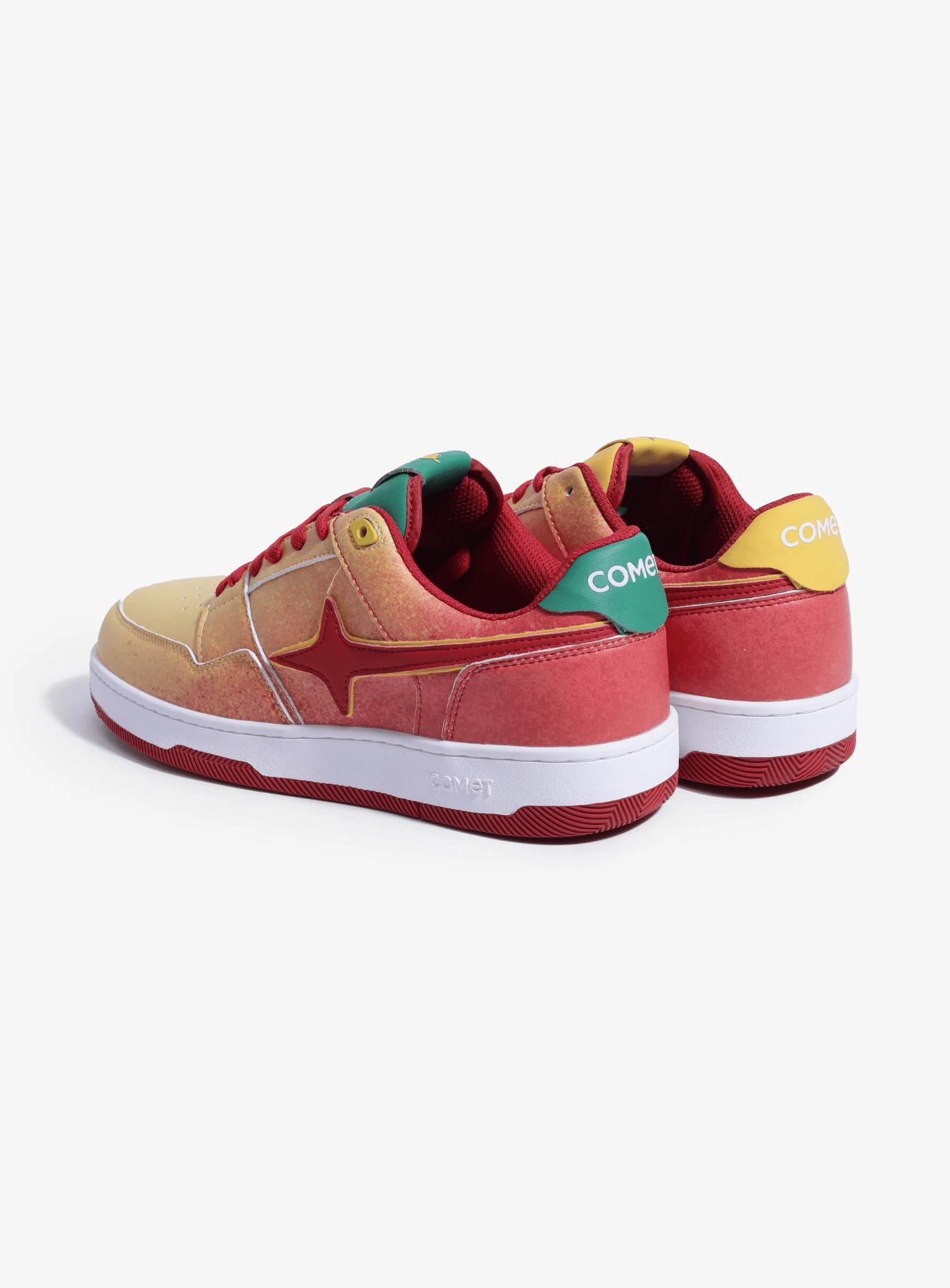
They had a series of drops tied to Indian culture. "Jugnu" (fireflies) tapped into childhood nostalgia. "Pataka" dropped for Diwali. "Ludo" referenced board game memories.
Each release carried meaning that didn't require translation. And the people who got it became evangelists.
The limited-drop model also solved a manufacturing problem. Comet didn't have scale when they started. They couldn't compete on volume. So they made volume irrelevant by having limited inventory.
The Manufacturing Rebellion
Utkarsh and Dishant spent time in Chinese factories learning the process firsthand. Then they came back and built relationships with Indian contract manufacturers, teaching them what they'd learned.
They developed their "SpaceWalk" 3-layer sole system. They designed for Indian feet - wider toe boxes, different arch support. They sourced materials from scratch and customized them. Every decision added complexity. Every constraint made them less like everyone else.
The manufacturing choice also gave them pricing power. By controlling the process and cutting retail markup, they could sell a ₹4,299 shoe that competed with Nike's ₹10,000 offerings on quality. The margin structure gave them room to invest in design, storytelling, and community - things that mattered more than ad spend for brand longevity.
Vertical integration isn't about control for control's sake. It's about building capabilities that competitors with legacy models can't easily replicate. Your operational complexity becomes their barrier to entry.
The decision to manufacture in India also became part of the story. "Made in India" stopped being a disclaimer and started being a point of pride. In a market where "foreign = better" had been the default assumption for decades, Comet was flipping the script. The quality proved the point.
Comet’s Growth
By late 2024, Comet had gotten loud enough to notice. Nike and Adidas still dominated India's sneaker market. But Comet's monthly revenue has crossed ₹5 crore with a valuation of ₹167 crores.
Their collaboration with artist Santanu Hazarika sold out in two hours - unprecedented speed for a homegrown Indian brand.
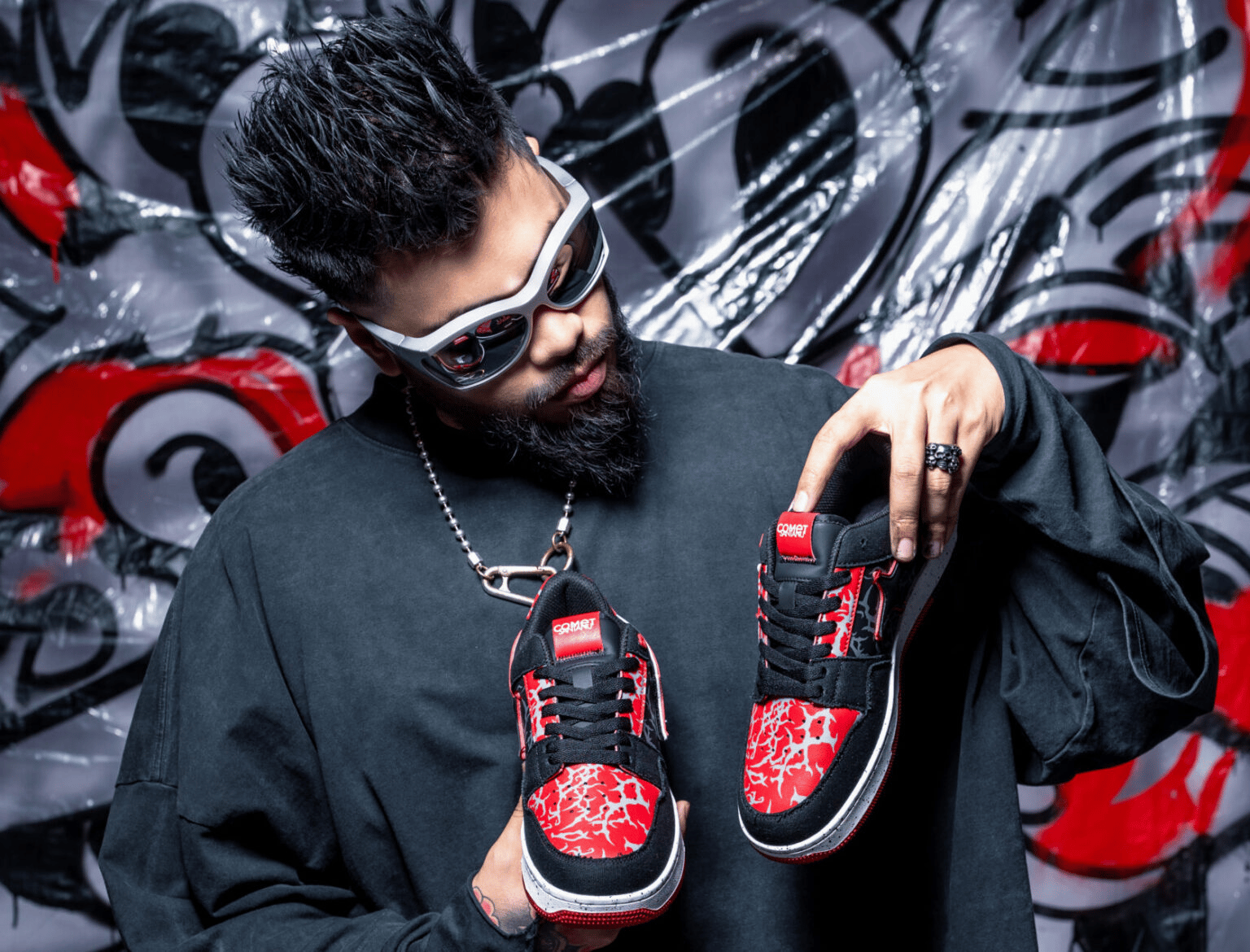
But Comet had been preparing for this. Their advantage wasn't the drop model - that could be copied. It wasn't pricing - that could be matched. It was the cultural credibility they'd built.
The brand had become shorthand for a particular kind of young Indian identity - aspirational but not pretentious, culturally rooted, and willing to take fashion risks. That positioning had to be earned through consistent authenticity.
First-mover advantage is real, but only if you use that time to build something structurally defensible. Comet built cultural moats that can make competitor moves look inauthentic.
However, Comet sits in an awkward middle. They're more expensive than budget brands like Campus and Red Tape (₹2,000 range), but not yet in the luxury tier with Nike and Adidas. First-time sneaker buyers in India often drift toward either extreme - dirt cheap or status-signaling expensive. The middle is harder to hold. But aspiration and storytelling can compel further purchases.
They're also planning offline expansion:
“Opening our Bangalore flagship was not just retail. Offline brings the brand to life through all five senses. With new stores coming to Delhi and Mumbai, each space is crafted as a living extension of what Comet represents.”
Key Insights:
Leverage Absence of Legacy
Early-stage companies should use their lack of historical baggage to make focused, differentiated positioning decisions incumbents cannot.Prioritize Community as Distribution
Build engaged demand before scaling operations, so distribution efficiency improves organically rather than being purchased later.Strategically Use Constraints
Treat capital, scale, and access limitations as inputs to strategy design, not obstacles to be overcome.Choose Markets Deliberately
Target categories where brand, culture, or identity influence purchase decisions and where founder insight creates structural advantage.Compete on Redefined Terms
Establish success metrics based on category ownership and defensibility, rather than direct competition with incumbents’ scale.

Reply