- The Hot Startups
- Posts
- How GIVA Disrupted India's Jewellery Market (Complete Startup Analysis)
How GIVA Disrupted India's Jewellery Market (Complete Startup Analysis)
Strategic lessons from India's fastest-growing D2C jewellery brand targeting Gen Z and millennials

Dhara Mandaliya
January 02, 2026 • Reading Time: 5 minutes
India is a country that has been historically investing in gold.
Even then, in 2019, Ishendra Agarwal, Nikita Prasad, and Sachin Shetty launched GIVA with a thesis that seemed counterintuitive.
They bet on silver - fashionable, affordable, everyday silver that millennials and Gen Z would wear to work, dates, and brunches.
Six years later, GIVA operates 280 stores across India, commands a ₹4,000 crore valuation, and has raised $131 million. The company projects ₹809 crore by FY26 with profitability in sight.
But GIVA's real achievement lies in creating a new category in a centuries-old industry and convinced an entire generation that jewellery could be fashion, not just wealth storage.
Here’s everything you need to know about the startup Giva at a glance:

Let’s look at their start-up journey!

Some of our recent stories:
How Prasuma created India’s first frozen momos
(and ₹131 Cr ITC acquisition)Building a ₹167 Cr Sneaker brand in 2 years
(The success of Comet Shoes)Bollywood’s beauty and fashion empires
(Successes and Failures)
The Problem:
When Agarwal and his co-founders began researching the jewellery market in 2019, they noticed something peculiar. India's jewellery industry was massive - a multibillion market - yet completely polarized.
On one end sat gold, dominated by branded giants like Tanishq, Kalyan Jewellers, and Malabar Gold. These players commanded trust but targeted weddings, festivals, and investment purchases.
On the other end was artificial jewellery: trendy but cheap, prone to tarnishing, and often causing skin irritations.
Silver occupied a strange middle ground. Indians consumed around 2,300 tonnes of silver jewellery annually, yet the segment remained completely unorganized. Small family-run shops sold silver, but none had scaled. No brand of Indians could trust the way they trusted established gold retailers.
Agarwal, who came from a family in the gold and diamond business, saw the gap clearly. Young urban consumers wanted variety without breaking the bank. They wanted to buy jewellery frequently, matching pieces to outfits and occasions. Gold's high price point made this impossible. Artificial jewellery offered variety but no longevity or quality assurance.
In interviews, Agarwal explained the core problem: small unbranded shops were "doing their manmani" (acting arbitrarily). They sold whatever purity they claimed without accountability. Consumers had no choice but to trust local jewellers, and that trust was eroding as some newer shops prioritized margins over quality.
So, they decided to create a reliable, contemporary silver brand that young Indians could depend on.
Category creation beats market share wars when you're solving for an unmet need rather than competing for existing customers.
The Solution:
GIVA's solution had three components, each addressing a specific barrier to trust and adoption.
First, they positioned silver as a fashion category by offering contemporary, minimal designs that millennials and Gen Z would wear daily. They operate in affordable luxury price range with products priced between ₹800-₹5,000 on an average. This makes impulse purchases feasible.
Second, they built trust through transparent certification and service. Every piece came with an authenticity certificate validating 925 sterling silver purity. GIVA also offered free lifetime plating service for gold-plated and silver products, reducing post-purchase anxiety about tarnishing.
Third, and perhaps most importantly, they went omnichannel from early on. While GIVA started as an online D2C brand, they recognized that jewellery requires touch-and-feel. People want to try pieces on, verify quality in person.
In Jan-Feb 2022, just around two years after launch, GIVA partnered with Shoppers Stop and Reliance Trends for shop-in-shop outlets.
By May 2022, they began opening standalone stores, the first one in Bangalore.
Apart from that, the brand is available on quick commerce apps like Blinkit and Instamart. And they also launched Giva Go in 2025, their propriety same-day delivery in 4 major Indian cities - Mumbai, Delhi, Bengaluru, and Hyderabad.
GIVA also uses a franchise model for some locations, reducing capital requirements. Franchisees invest in store fit-outs and inventory, sharing risk. This lets GIVA expand faster than if they owned every store outright.
This physical presence and quick online presence:
built brand visibility and credibility
allowed customers to experience quality firsthand, converting skeptics.
created a discovery-to-purchase cycle where consumers might discover GIVA in stores, research online, and buy through whatever channel felt convenient.
The omnichannel approach also generates valuable data. GIVA tracks which designs sell best in which cities, online versus offline preference patterns, and how marketing channels drive discovery. This informs inventory decisions, design trends, and marketing budget allocation.
From a brand perception perspective, physical stores also signaled legitimacy and permanence. They suggested GIVA wasn't another flash-in-the-pan internet brand but a serious jewellery player competing with established names.
By 2025, GIVA operated 280 physical stores alongside its e-commerce site, app, and marketplace presence.
The product portfolio also expanded strategically. GIVA began with silver but added 14K and 18K gold in 2023, responding to customer requests. They entered lab-grown diamonds, aligning with sustainability values and offering "diamond experience" at accessible prices.
Customers who started with silver and built trust might graduate to gold for special occasions. Lab-grown diamonds let GIVA compete in the aspiration segment without losing the accessibility that defined the brand.
Don't just fill a gap - redefine the category entirely by changing how customers think about the product itself.
Funding Journey:
The company raised its first seed round in August 2019, just months after launch - ₹75 lakh. Early investors included India Quotient, Snapdeal founder Kunal Bahl, and ShareChat co-founder Ankush Sachdeva. By July 2020, GIVA had raised $675,000 across multiple seed rounds.
Series A came in 2021-22 as retail expansion accelerated. The company brought in larger institutional investors who understood omnichannel plays. Alteria Capital provided debt financing in December 2022, signaling confidence in business fundamentals.
The Series B rounds in 2023-24 were transformational. In April 2023, Premji Invest led a round that established GIVA as a serious player. Premji Invest’s involvement validated GIVA's strategy.
By October 2024, GIVA closed an extended Series B at ₹525 crore from Premji Invest, Epiq Capital, Edelweiss Discover Fund, and GIVA management. This round facilitated partial exits for early investors A91 Partners and India Quotient, allowing founders and new investors to consolidate ownership.
Then came the Series C in June 2025: ₹530 crore (approximately $61.5 million) led by Creaegis, with participation from Premji Invest, Epiq Capital, and Edelweiss Discovery Fund.
The Series C wasn't just capital for expansion. It represented a bet on GIVA's ability to dominate affordable fine jewellery. Creaegis specializes in scaling digital-first consumer brands. Their involvement suggested they saw GIVA reaching much larger scale - potentially an exit to a Tata or Reliance, or an IPO similar to competitor BlueStone's planned 2025 listing.
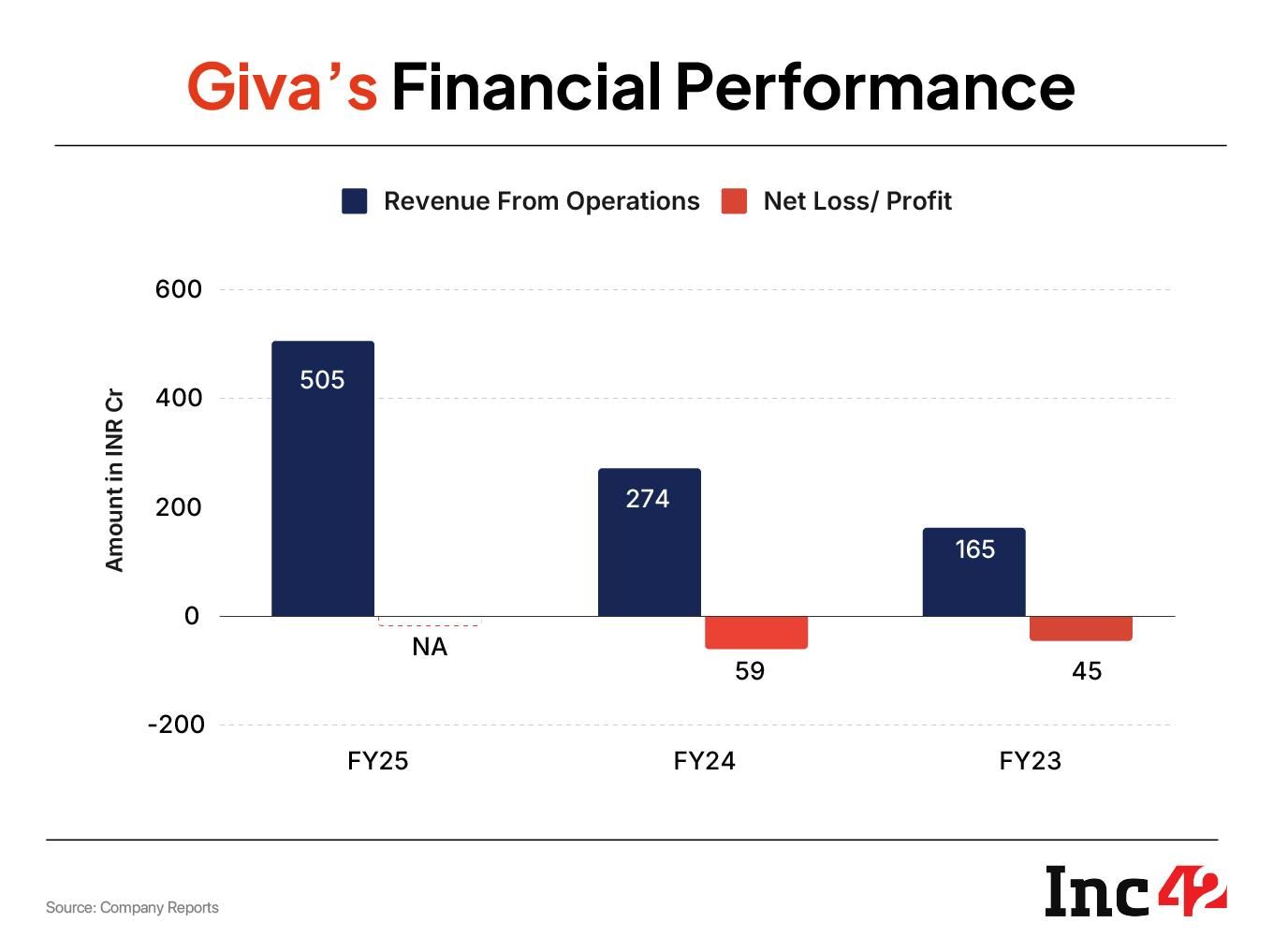
GIVA's stated use of funds remained consistent: retail expansion (particularly tier-2 cities), technology investment in supply chain, deepening lab-grown diamond offerings, and expanding gold product lines. The company projects ₹809 crore revenue by FY26 with ₹10 crore profit before tax, signaling the path to profitability as scale benefits kick in.
The Competition:
GIVA's competitive landscape is complex because they're fighting three distinct battles.
First, there's the war for daily-wear jewellery against established online players. CaratLane focuses on lightweight gold and diamond jewellery, overlapping directly with GIVA's expanded product range.
BlueStone targets similar customers with gold, platinum, and diamond jewellery. Their IPO filing suggests institutional investors believe the category can support multiple winners.
GIVA's silver focus initially differentiated them. But as the company expanded into gold and lab-grown diamonds, competitive overlap increased.
Second, traditional players are slowly embracing omnichannel, launching their own online stores and contemporary sub-brands (like Kalyan's Candere). Their advantages: decades of trust, superior margins on high-ticket items, and existing customer bases.
GIVA's counter is agility. Traditional retailers optimize for gold sales and wedding purchases. GIVA targets a customer segment these giants haven't prioritized: daily jewellery for young buyers.
Third, there's the shadow competitor: the unorganized sector. Small local jewellers still dominate India's jewellery market.
For GIVA, it's less about beating competition and more about converting the vast majority of Indian jewellery buyers who've never considered branded options.
In category creation plays, you compete simultaneously with incumbents, other challengers, and consumer habits - each requiring different strategies.
Key Insights:
Category Creation:
GIVA succeeded by creating the "branded affordable fine jewellery" category rather than competing for existing gold market share.Omnichannel Integration:
Physical stores build trust while digital channels enable discovery and convenience - they're complementary.Behavioral Shift:
The company capitalized on millennials and Gen Z viewing jewellery as fashion and self-expression rather than pure investment.Funding Strategy:
Patient capital for category leadership justified six years of losses while building market position before profitability.Product Evolution:
Expanding from silver into gold and lab-grown diamonds captured more customer wallet share while maintaining affordable positioning.

Reply